How to Keep Your Toddler's Spanish Going After Preschool Starts
The biggest threat to your bilingual progress isn't your fluency level -- it's the moment English-dominant school takes over your child's day. Here's how to protect the Spanish you've built.
Lindsey Carleton, MA, CCC-SLP | Bilingual Speech Language Pathologist
4/2/20267 min read

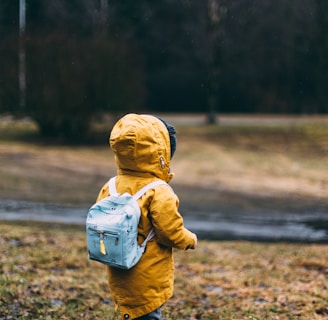
You spent a year or two building a bilingual foundation at home. Your toddler knows their colors in Spanish, sings along to "Los Pollitos Dicen," and says "mas" at dinner without being prompted. Then they start preschool, and within a few weeks, everything seems to shift. They're coming home speaking only English. They resist when you try Spanish. They tell you "I don't want to speak Spanish -- my friends don't."
This is the moment where the majority of bilingual families give up. Studies show that language attrition -- the gradual loss of a language due to reduced exposure -- can begin in as little as a few months when a child enters an English-dominant school environment. But attrition isn't inevitable. Families who maintain consistent Spanish exposure at home during the school years raise children who are genuinely, durably bilingual. The key is knowing what to protect and how.
Why School Changes Everything
Before preschool, you controlled most of your child's language environment. If Spanish was part of your daily routine, your child heard it for hours. The moment school starts, that dynamic flips. Your child now spends 6-8 hours a day immersed in English -- with teachers, classmates, books, songs, and social dynamics all in English. English becomes the language of friendship, achievement, and belonging.
This isn't a problem with English. It's a math problem. If your child was getting 2-3 hours of Spanish per day at home and now spends 8 hours in English at school, the ratio has shifted dramatically. Spanish exposure might drop from 25% of waking hours to 10% or less. And as we know from bilingual research, exposure below certain thresholds leads to comprehension without production -- your child understands Spanish but stops speaking it. For the full breakdown on how exposure levels affect bilingual development, see our post on how much Spanish exposure your child actually needs.
The social pressure component matters too. Three-year-olds are beginning to notice social norms. They see that none of their classmates speak Spanish, and they don't want to be different. This is developmentally appropriate -- but it means Spanish needs to remain associated with positive experiences, not correction or obligation.
Strategy 1: Protect Your Spanish Routines
The routines you built before preschool are your most valuable asset. Don't abandon them. Instead, double down on the ones that happen during non-school hours.
Morning routine: Keep the Spanish greetings, breakfast vocabulary, and getting-dressed phrases. These take 10-15 minutes and happen before the English world takes over. "Buenos dias," "Que quieres comer?" and "Donde estan tus zapatos?" should stay in place as non-negotiable daily Spanish touchpoints.
After-school transition: The moment you pick your child up or they walk in the door, greet them in Spanish. "Hola mi amor! Como estuvo tu dia?" (Hi my love! How was your day?). This signals that home is a Spanish space. It's a gentle reset from the English school environment. Don't demand they respond in Spanish -- just make it the language you use.
Dinner time: Family meals are protected time. Keep labeling food in Spanish, asking questions in Spanish, and using the mealtime phrases you've been building. If your child responds in English, that's fine -- what matters is that they're hearing Spanish in this consistent context. Over time, they'll respond in Spanish again when they're ready.
Bedtime: This remains the most powerful Spanish window. A bilingual book, a Spanish lullaby, and "buenas noches, te quiero" as the last words of every day. Sleep-adjacent learning is neurologically privileged -- the brain consolidates language during sleep. Bedtime Spanish is especially sticky. For a complete bedtime plan, see our bilingual bedtime routine guide.
Strategy 2: Make Spanish the Fun Language
Once school starts, you're competing with the social power of English. You can't out-quantity school's English exposure. But you can make Spanish the language of the most enjoyable parts of your child's life.
Special activities in Spanish. Baking together? Do it in Spanish. Building Legos? Count and describe in Spanish. Art projects? Name the colors and shapes in Spanish. When Spanish is the language of one-on-one time with a parent, fun activities, and creative play, your child associates it with positive emotions rather than rules.
Spanish media for downtime. Switch their favorite shows to the Spanish audio track. Most streaming services (Netflix, Disney+, Amazon) offer Spanish dubs for kids' shows. If your child already loves the show in English, they'll accept the Spanish version because the characters and stories are familiar. This adds 30-60 minutes of Spanish exposure per day with zero effort from you.
Spanish playdates. If there are other bilingual or Spanish-speaking families in your area, arrange playdates. When your child hears a peer speaking Spanish, it normalizes the language in a way that parental instruction never can. Even one bilingual friend can make a significant difference in your child's willingness to use Spanish socially.
Strategy 3: Don't Fight the English -- Add to It
One of the biggest mistakes parents make when school shifts the language balance is trying to restrict English at home. "We speak Spanish in this house!" sounds good in theory, but in practice it creates a power struggle with a 3 or 4-year-old who is bursting to tell you about their day -- in English, because that's the language they experienced it in.
A more effective approach is to respond in Spanish to their English. They say "Mom, we played with blocks today!" and you respond "Que divertido! Jugaron con bloques? De que colores?" (How fun! You played with blocks? What colors?). You're not correcting their English. You're modeling Spanish. You're showing them that you understand both languages and that Spanish is just how you respond. Over time, this gentle immersion is far more effective than language policing.
If they ask "Why do you always talk in Spanish?" keep it simple and warm: "Because I love teaching you both languages. You're so lucky -- you know TWO ways to say everything!" Frame bilingualism as a superpower, not a chore. At this age, how you talk about Spanish shapes how they feel about it for years to come.
Strategy 4: Increase Input Quality Since Quantity Drops
Since total Spanish hours inevitably decrease when school starts, you need to make every Spanish minute count. This means prioritizing interactive, high-quality input over passive background exposure.
Read together in Spanish daily. Even 10 minutes of shared bilingual reading is among the highest-value language activities. It's interactive (you're asking questions, they're responding), context-rich (pictures support comprehension), and emotionally engaging (it's bonding time). Our guide to bilingual books for toddlers includes recommendations that work through the preschool years.
Use scripted activities on weekends. Weekends are your chance to give Spanish a longer runway. A 20-minute structured bilingual activity on Saturday and Sunday adds meaningful exposure during a time when English school isn't competing. The Palabra Garden 12-Month Bilingual Curriculum provides weekly scripted activities specifically designed for this -- parent scripts tell you exactly what to say so the quality of input stays high regardless of your fluency level.
Narrate in Spanish during errands. Grocery shopping, walking the dog, driving to the park -- these routine moments are opportunities for Spanish conversation that don't require any extra time. "Necesitamos manzanas y leche" (We need apples and milk) at the grocery store. "Mira, el perro grande!" (Look, the big dog!) on a walk. Every narrated moment is language input your child processes without even realizing it.
Strategy 5: Build a Spanish Community
Your home can't be the only place your child encounters Spanish. The more sources of Spanish input in their life, the more resilient their bilingualism becomes.
Spanish story time at the library. Many public libraries offer bilingual or Spanish-language story times. Check your local library's event calendar. Even attending once a month gives your child the experience of hearing another adult speak Spanish, which reinforces that the language exists beyond your family.
Cultural events and festivals. Hispanic heritage events, Dia de los Muertos celebrations, bilingual church services, or cultural festivals all provide immersive Spanish experiences. Your child sees that Spanish belongs to a vibrant community, not just to your household routine.
Online bilingual communities. Connect with other bilingual families through Facebook groups, Instagram communities, or local parenting networks. Shared experiences and encouragement from families on the same journey helps you stay motivated during the phases when it feels like your child is losing Spanish.
What to Expect in the First Year of School
Here's the realistic timeline most bilingual families experience after preschool starts:
Months 1-2: Your child comes home speaking mostly English. They may resist Spanish or ignore it. Spanish production drops. This is the scariest phase, but it's temporary. Their comprehension is still intact -- they understand what you're saying even if they won't respond in Spanish.
Months 3-4: If you've maintained your routines and kept Spanish positive, you'll notice your child settling into a pattern. They accept Spanish at home even if they don't always use it. They start picking up where they left off in familiar routines -- singing along to Spanish songs, using a few Spanish words at dinner.
Months 5-6: A new equilibrium emerges. English is the school language, Spanish is the home language. Your child may switch naturally between the two depending on context. Their Spanish vocabulary may not grow as fast as before school, but it stabilizes rather than declining. With continued consistent input, it continues to develop alongside English.
The families who maintain bilingualism through school have one thing in common: they didn't stop during the hard months. They kept the routines, kept the music playing, kept the bedtime stories going, and trusted that the foundation they built would hold. It does.
Your Action Plan
If preschool is approaching (or already happening), here are the three non-negotiable habits to maintain:
First, Spanish at breakfast and bedtime every day -- these bookend the school day with bilingual input. Second, one bilingual activity or Spanish book on weekends -- this deeper engagement keeps production active. Third, Spanish media during downtime -- switch one show per day to Spanish audio for effortless passive exposure.
Those three habits, consistently maintained, are enough to protect your child's Spanish through the English-dominant school years. It's not about doing everything in Spanish -- it's about doing something in Spanish, every day, without fail.
If you want a complete system that maps out this approach week by week with age-appropriate activities and parent scripts, the Palabra Garden 12-Month Bilingual Curriculum ($250) was designed for exactly this transition. It keeps Spanish structured and intentional so it doesn't get lost in the shuffle of school life.
Starting from scratch? Download the free bilingual starter kit and build your foundation now -- the stronger it is before school starts, the more resilient it will be after.
Author Bio
Hi, I’m Lindsey Carleton, MA, CCC-SLP, a bilingual speech-language pathologist with more than 11 years of experience and a fellow toddler mom. I created Palabra Garden to support families who want intentional, play-based learning at home.
Through my work as an SLP, I’ve seen how powerful early language, social-emotional development, and hands-on learning can be for toddlers and preschool-aged children. Palabra Garden brings those same principles into your home with bilingual activities, preschool curriculum ideas, and simple strategies that support growing minds.
I believe children learn best through connection, curiosity, and everyday moments of discovery.