Spanish Colors Beyond Red and Blue — Naming Subtle Shades With Toddlers
By Lindsey Carleton, MA, CCC-SLP
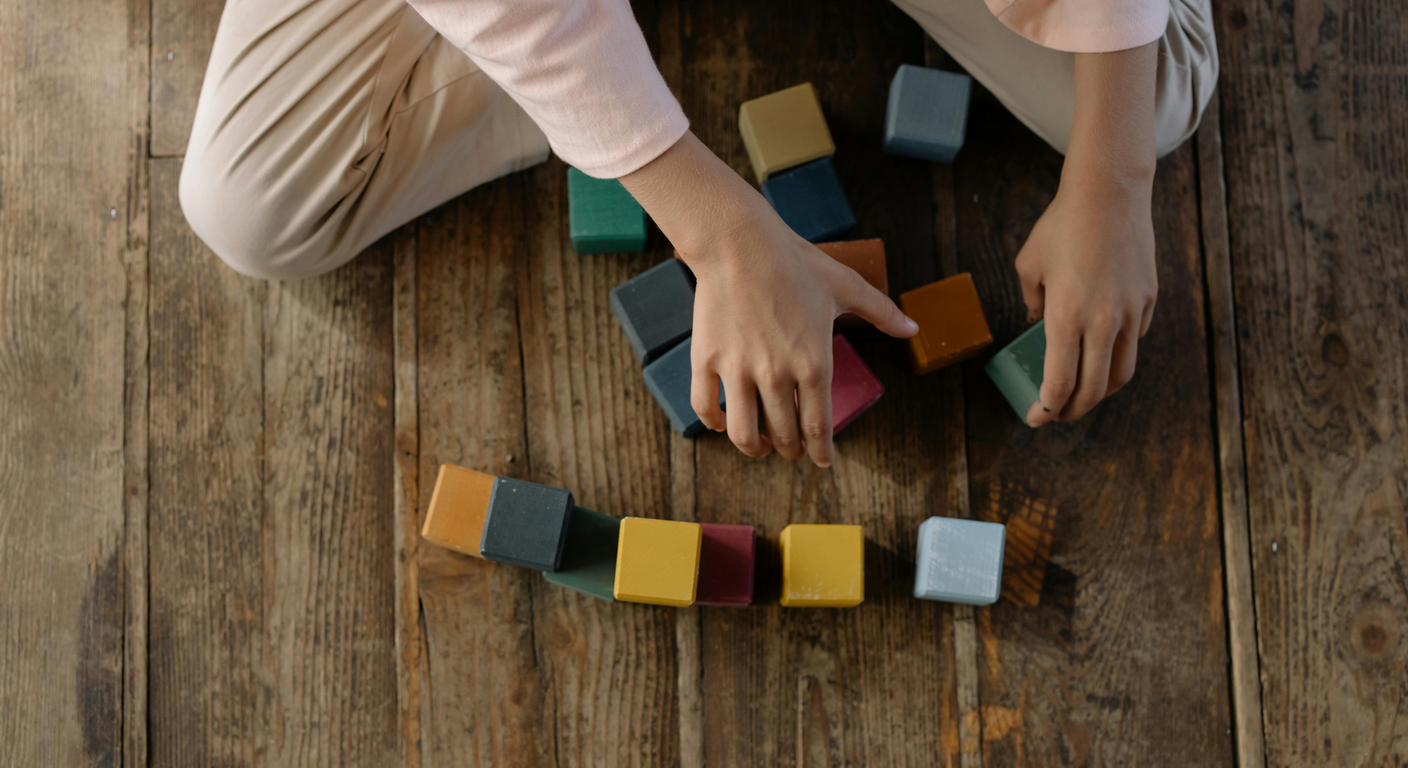
By the time a toddler reaches 3, they’ve usually got the eight basic colors locked in — rojo (red), azul (blue), amarillo (yellow), verde (green), anaranjado (orange), morado (purple), rosado (pink), negro (black). What most curricula don’t teach next is the rich middle layer: the dozens of subtle Spanish shade words that describe the real colors children see every day. Beige (beige), turquesa (turquoise), dorado (gold), plateado (silver), fucsia (fuchsia), granate (maroon). These are the words that turn a child’s color vocabulary from a coloring-book set of crayons into something closer to a painter’s palette.
Here is how to introduce them, and which to start with.
Why expand beyond basic colors
Toddlers can see far more shades than they have words for. Color vocabulary expansion doesn’t teach them to see new colors — they already see them. It teaches them to name what they’re already perceiving. That naming sharpens attention and gives them a tool for describing the world more precisely.
In bilingual children, the second language often gets more color vocabulary than the first because parents introduce colors deliberately in Spanish while assuming colors get picked up “naturally” in English. By age 5, a bilingual child whose family does color work in Spanish often has more nuanced Spanish color vocabulary than English.
The 25 subtle shade words
I’ve grouped these into five categories so you can introduce them in themed clusters rather than as one long list.
The metal-and-precious-stone shades (5)
| Spanish | English | Pronunciation |
|---|---|---|
| dorado | gold | doh-RAH-do |
| plateado | silver | pla-teh-AH-do |
| bronce | bronze | BRON-seh |
| cobre | copper | KO-breh |
| perla | pearl | PEHR-la |
The earth-and-sky shades (6)
| Spanish | English | Pronunciation |
|---|---|---|
| beige / beis | beige | beysh |
| café | brown/coffee | ka-FEH |
| ocre | ochre | OH-kreh |
| terracota | terracotta | teh-rra-KO-ta |
| arena | sand | a-REH-na |
| cielo | sky blue | SYEH-lo |
The blue-and-green family (5)
| Spanish | English | Pronunciation |
|---|---|---|
| turquesa | turquoise | toor-KEH-sa |
| menta | mint | MEN-ta |
| oliva | olive | oh-LEE-va |
| esmeralda | emerald | ehs-meh-RAHL-da |
| azul marino | navy blue | a-SOOL ma-REE-no |
The warm pinks and reds (5)
| Spanish | English | Pronunciation |
|---|---|---|
| fucsia | fuchsia | FOOK-syah |
| coral | coral | ko-RAHL |
| salmón | salmon | sal-MOHN |
| granate | maroon | gra-NAH-teh |
| vino | wine | VEE-no |
The light-and-dark modifiers (4)
These aren’t standalone shades but modifiers that work with any color word. Once your toddler has them, your color vocabulary explodes.
| Spanish | English | Pronunciation |
|---|---|---|
| claro | light | KLAH-ro |
| oscuro | dark | os-KOO-ro |
| brillante | bright | bree-YAHN-teh |
| pálido | pale | PAH-lee-do |
With these four modifiers, your toddler can say “verde claro” (light green), “azul oscuro” (dark blue), “rosa pálido” (pale pink). The whole color spectrum becomes accessible.
How to introduce them (without quizzing)
The mistake most parents make with vocabulary expansion is testing the child. “What color is this?” That’s a quiz, and it triggers performance anxiety in toddlers who’d otherwise be happy to absorb the word.
Instead, use the narrate-and-pair pattern:
- Name the color while pointing at it. “Look at this leaf. It’s verde oliva — olive green.”
- Re-use the word within 5 minutes. “That truck is also verde oliva. Same color.”
- Bring the word back tomorrow. Spot another verde oliva thing the next day. “Remember verde oliva? Here it is again.”
After three or four exposures, the word locks in. No quiz needed. The child will say it spontaneously when ready.
For the broader vocabulary-acquisition methodology, see our 10 Spanish words to teach your toddler this week post.
A four-week rollout
If you want to introduce all 25 in roughly a month:
- Week 1: Metals (5 words). Easy to spot at home — jewelry, faucets, coins, the back of a phone.
- Week 2: Earth-and-sky (6 words). Built into walks and outdoor time.
- Week 3: Blue-and-green family (5 words). Easy to find at the grocery store and in clothing.
- Week 4: Pinks and reds + modifiers (9 words). The flower aisle, the toy aisle, the wardrobe.
If your toddler is 2 and this feels too fast, halve the pace. Twelve shades across two months is also great.
Where these come up naturally
Color vocabulary is much easier to teach when you’re not staging it. Here are the highest-leverage real-life contexts:
- The grocery store — salmón (salmon pink), oliva (olive), terracota (terracotta, on a squash), fucsia (fuchsia, on a dragonfruit), cobre (copper, on peppers). See our grocery store Spanish post.
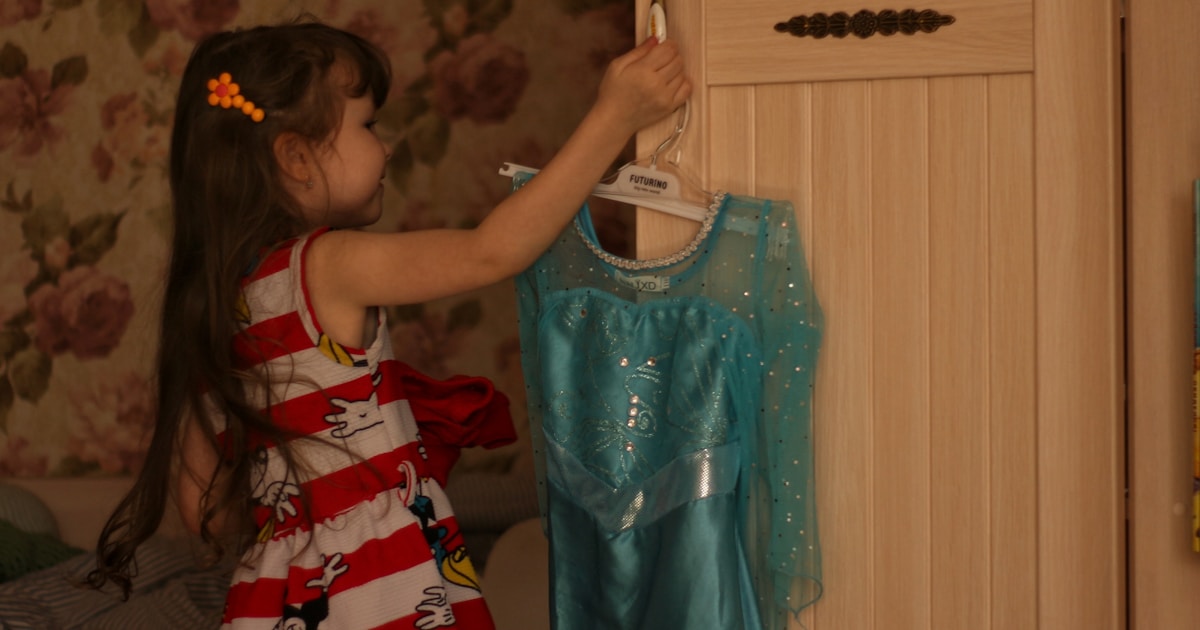
- Getting dressed in the morning — azul marino (navy), beige (beige), granate (maroon), perla (pearl). The wardrobe is a color lab.
- The crayon box — some crayon sets label shades in both English and Spanish, and names like dorado (gold), plateado (silver) and esmeralda (emerald) turn up often enough to be worth pointing out.
- Outdoor walks — cielo (sky blue), ocre (ochre), arena (sand), oliva (olive), terracota (terracotta). Nature is your color manual.
- Art projects — when you’re mixing paints together, name the result. “Rosa + blanco = rosa pálido.”
Frequently asked questions
My toddler doesn’t even have basic colors solid yet — is this list premature?
Yes. Get the eight basics solid first. Once your child reliably names rojo (red), azul (blue), amarillo (yellow), verde (green), anaranjado (orange), morado (purple), rosado (pink) and negro (black), then layer in 2–3 shades at a time. Don’t push.
What’s the difference between rosa and rosado?
Both mean pink. Rosado is more common in Mexico and the U.S. Rosa is universal but slightly more formal. Either works.
Is café really how you say brown?
In most of Latin America, yes. Marrón (brown) is more common in Spain. Some Latin American countries (especially in the Southern Cone) use marrón too. Café is the most widely understood across the Americas.
Why is azul marino two words but other shades one word?
Spanish creates dark/navy shades by adding marino (sea-like) or oscuro (dark). Azul marino literally means “sea blue” — the same shade English calls navy. You can also say azul oscuro (dark blue).
Should I introduce blanco (white) and gris (gray) in the basic eight or here?
Basic eight, definitely. I left them out of this list because they’re foundational, not shade-level. Make sure they’re solid alongside rojo (red), azul (blue) and the rest of the basic eight.
Hi, I’m Lindsey Carleton, MA, CCC-SLP, a bilingual speech-language pathologist with more than 11 years of experience and a fellow toddler mom. I created Palabra Garden to support families who want intentional, play-based learning at home.
If you want sequenced vocabulary across the year (colors, foods, routines, feelings, weather), the 12-month curriculum handles the pacing. For free, our Spanish phrase cards get you started in five minutes.