Montessori and Bilingual Learning: Why We Use Real Photos, Not Worksheets
By Lindsey Carleton, MA, CCC-SLP
If you’ve shopped around for a way to teach your toddler Spanish, you’ve seen the two usual shapes it comes in: thick workbooks full of trace-the-letter pages, and cartoon flashcards with a smiling purple dog labeled perro. Both feel like “learning.” Neither is how a two-year-old actually builds language.
I’m a speech-language pathologist, and when I built the Palabra Garden curriculum I made a deliberate choice to follow Montessori principles instead — real photographs, hands-on work, and a child who leads the pace. Here’s what that means, and why it matters for how your child learns.
What “Montessori” actually means for language
Montessori isn’t a look or a color palette. It’s a set of ideas about how young children learn best, and a few of them shape everything about how the curriculum works:
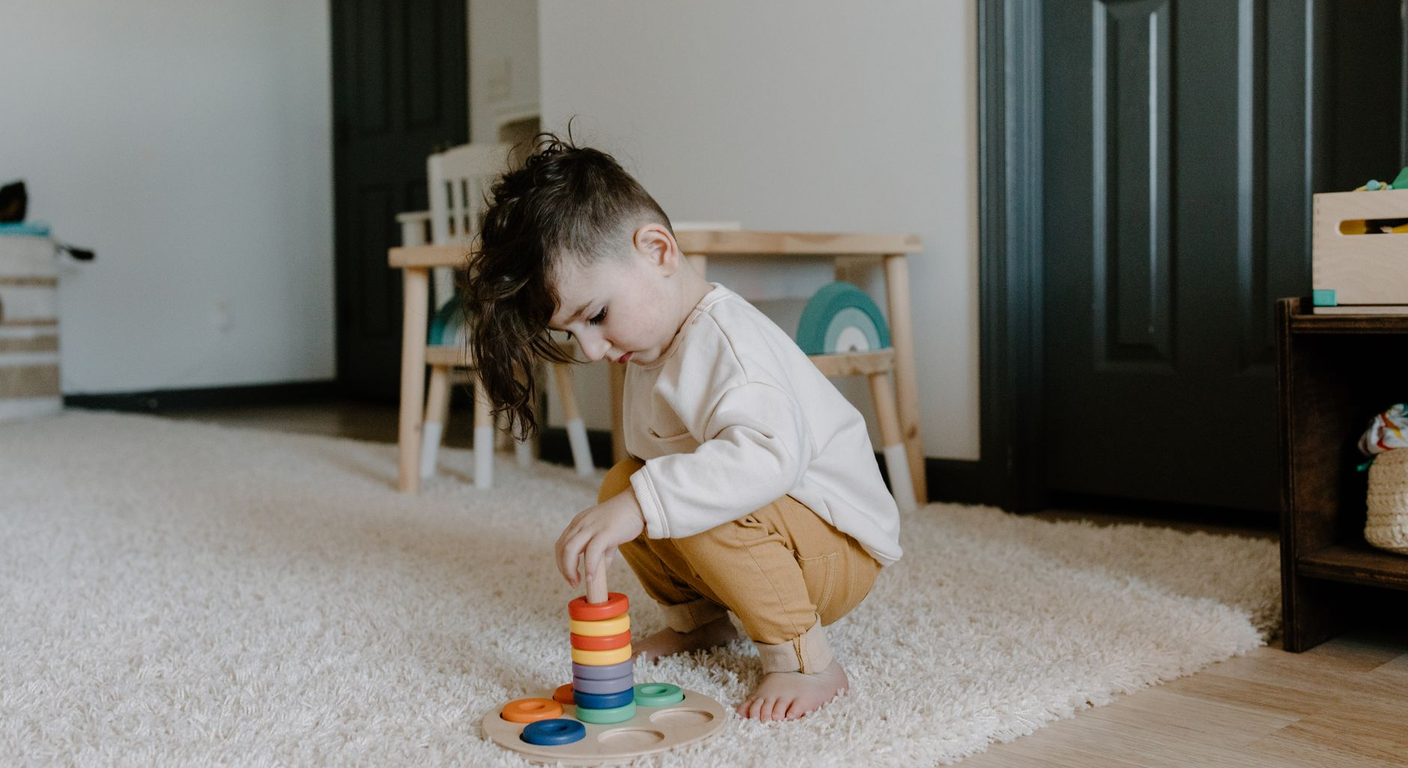
- The prepared environment. Instead of a pile of everything, your child works from a small, intentional set of materials — a shelf with a few things that support this month’s language. Less clutter, deeper focus.
- Isolation of one concept. Each material teaches one clear thing. A card for manos (hands) shows hands — not a busy scene where “hands” is one of fifteen things competing for attention.
- The child leads. Repetition happens because your child returns to a material they’re drawn to, not because a worksheet says “do ten more.” Interest drives mastery.
- Hands and real experiences first. Language attaches to real moments — pouring water, washing hands, naming the fruit on the table — not to abstract exercises.
These aren’t decorative. They’re how a 2–5-year-old’s mind is actually wired to absorb a language.
Why real photographs, not cartoons
This is the difference parents notice first, and it’s the one I feel most strongly about.
In Montessori, young children are given real, accurate images of the world before cartoons and abstractions. There’s a reason. When a toddler is still building the concept of “dog,” a real photograph of a dog gives them a clear, truthful anchor — this is what a dog looks like. A stylized cartoon dog, with human eyes and a bowtie, adds noise to a concept they haven’t finished forming yet. Abstraction is wonderful later, once the real concept is solid.
So every vocabulary card in the curriculum uses a real photograph, presented the Montessori way — the photo first, then the photo with the word, then the word alone as your child grows into reading. It’s called three-part nomenclature, and it’s the same structure Montessori classrooms have used for a century. Your child sees el perro attached to an actual dog, in both English and Spanish, with nothing extra to sort through.
Why it isn’t a workbook
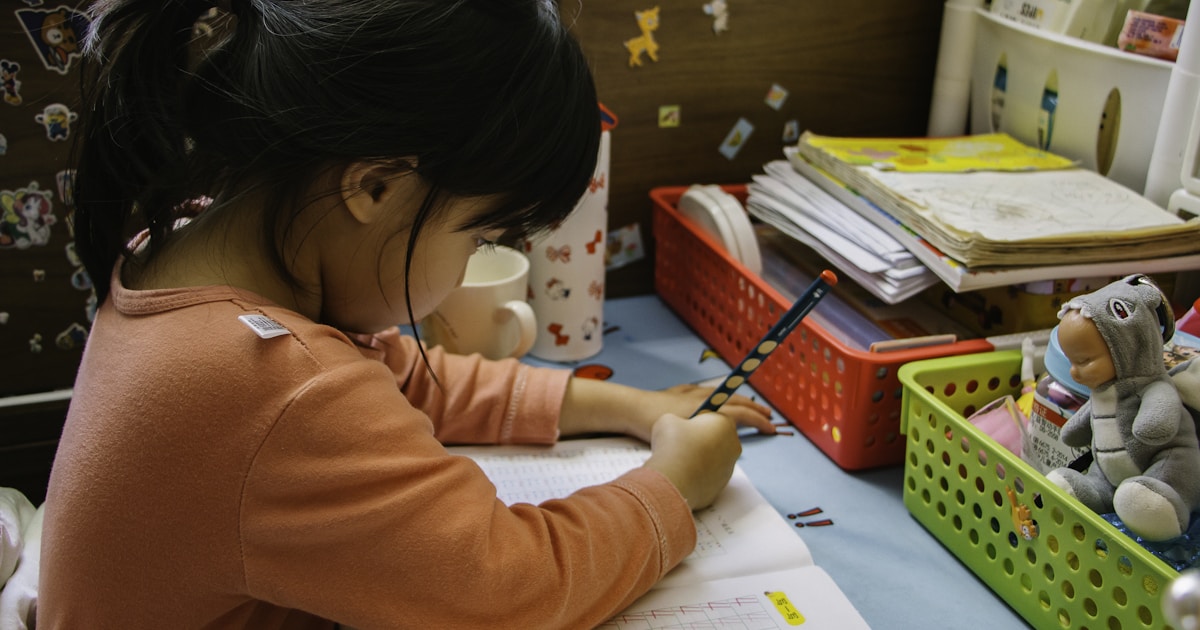
Workbooks assume a child who sits, holds a pencil, and completes rows. That’s not a toddler, and it’s especially not how anyone — child or adult — learns to speak a language.
Language is relational and spoken. It lives in back-and-forth moments: “¿Quieres más?” at breakfast, “buenas noches” at the light switch. You can’t fill-in-the-blank your way to a first word. So the curriculum isn’t pages to complete — it’s a weekly rhythm of a few words, attached to routines you already have (morning, mealtime, bath, bedtime), with a parent guide that hands you the exact phrases to say. The printable materials are supportive tools — vocabulary cards, a shelf setup, simple hands-on activities — not the foundation. The foundation is you, talking to your child.
That also means there’s no “falling behind.” A worksheet you skipped nags at you. A gentle weekly rhythm just picks back up whenever you do.
What this looks like in practice
Inside each month, you get:
- Real-photo vocabulary cards in English and Spanish, sequenced in the order children actually acquire language (not colors-and-numbers-first).
- A Montessori shelf setup — the small, prepared set of materials for that month’s theme.
- Weekly lesson plans and a parent guide with the phrases to say and simple, hands-on activities.
- A Pronunciation Companion so you can say any word with confidence, even if you’re not fluent.
No app. No cartoons. No worksheets. No fluency required — just a calm, doable rhythm built the way toddlers actually learn.
Why it matters for your child
When materials are real, uncluttered, and child-led, a few things happen: your child focuses longer, they transfer the words to real life (because the words came from real life), and the whole thing feels less like a curriculum and more like a natural part of your day. That’s the point. Bilingualism at this age isn’t built through drills — it’s built through repetition inside warm, real moments, with materials that respect how young a young mind really is.
If you’d like to see the approach before anything else, the free Sample Week is a real, doable week you can try this week — same real-photo, routine-based method, no fluency required. And if it feels like the right fit, the full 12-month curriculum is $250, one purchase, yours to keep.
You don’t need a workbook. You need a few real words, a warm moment, and a rhythm you can actually keep.