Famous Latino Authors to Read With Toddlers (10 Picks by Age)
By Lindsey Carleton, MA, CCC-SLP
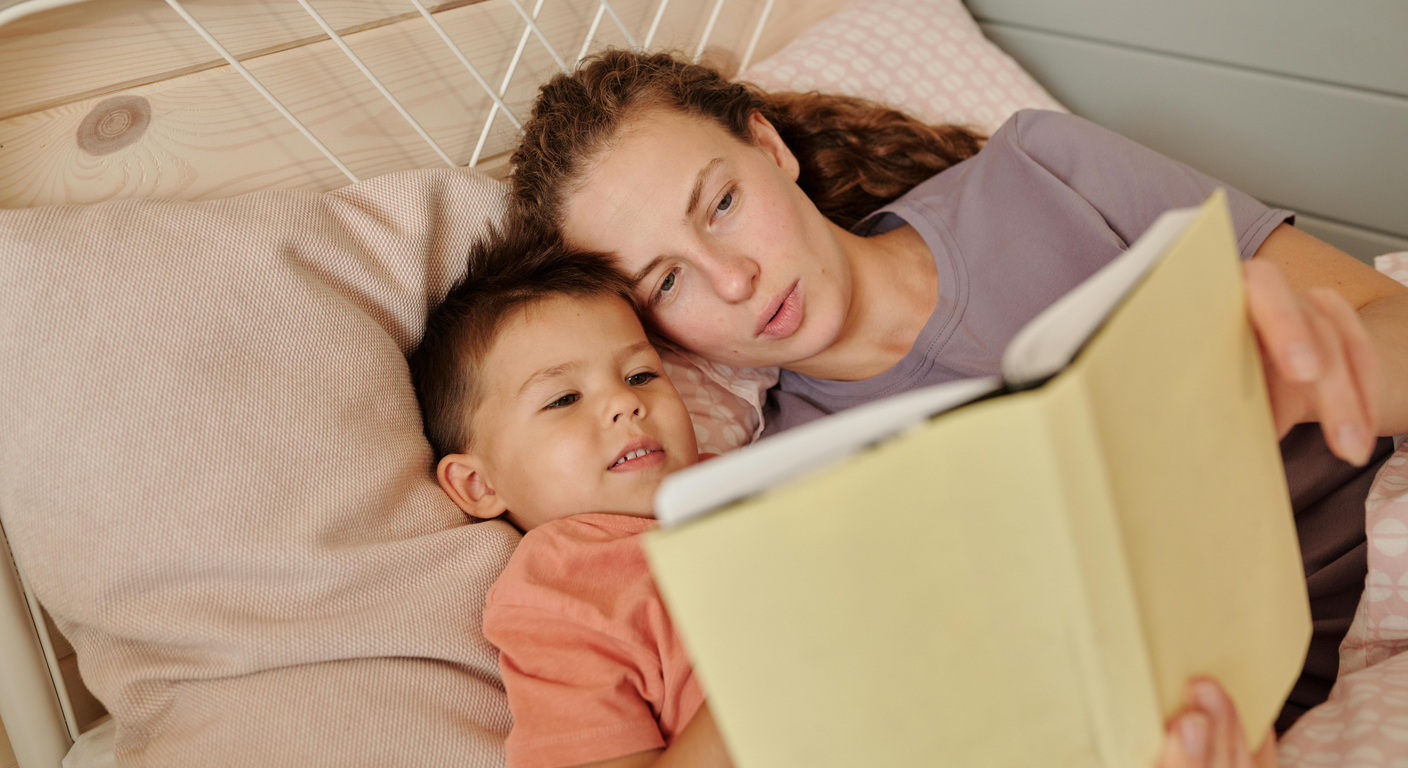
The fastest way to weave Latino heritage into a toddler’s life is to put the books of Latino authors into your nightly reading rotation. A toddler doesn’t need to know the author’s biography. They just need to absorb, week after week, that people who look like the characters in this book make this book. That association builds quietly, long before a child could explain it to you.
Here are ten Latino children’s authors whose work I’d put on any 2–5-year-old’s bookshelf. Organized by which age each author lands best, with what each book teaches and what to talk about while you read.
Best for ages 2–3 (early board books, short picture books)
1. Yuyi Morales — Niño Wrestles the World, Bright Star / Lucero
Morales is one of the most decorated Latina children’s book creators working — a Pura Belpré winner and a Caldecott Honor recipient. Bright Star follows a whitetail fawn through the desert borderlands, with Spanish woven into the English text and a steady, reassuring refrain. Like Alma, it comes as two editions rather than one bilingual book: Bright Star in English, and an all-Spanish Lucero.
What to talk about: Point at each animal as you say its name in both languages. “Venado. Deer. Look — venado.” Morales’s art rewards slow reading.
2. Lulu Delacre — Arroz con Leche / Rice Pudding, Las Navidades
Delacre’s bilingual song books are stage-one bilingual literacy. Arroz con Leche collects nursery rhymes from across Latin America with English versions on the facing page. The rhymes are short and singable; you can do one or two at a time without losing a 2-year-old.
What to talk about: Sing them, don’t read them. Pick one rhyme as your family’s anthem for the season.
3. Susie Jaramillo — Little Chickies / Los Pollitos and the rest of the Canticos series
Jaramillo is a Venezuelan-American author-illustrator and the creator of Canticos, the Emmy-nominated bilingual nursery-rhyme series. Her board books are built for the youngest end of this list — sturdy pages, one traditional song per book, and a reversible format that flips so you can read it through in either language. Little Chickies is the song Los pollitos dicen, which a lot of Spanish-speaking grandparents already know by heart.
What to talk about: Don’t read these either — sing them. If a grandparent or family friend knows the song, ask them to sing it once so your child hears it from a native speaker, then keep singing it yourself all week.
Best for ages 3–4 (longer picture books, story arcs)
4. Pat Mora — Tomás and the Library Lady, Confetti: Poems for Children
Mora’s books are gentle bridges between Latino family life and the broader U.S. child’s experience. Tomás and the Library Lady tells the true story of a migrant farmworker’s child who discovers books at the public library. The themes — belonging, language, the love between a child and a grandparent who speaks Spanish — are universal but specifically resonant for bilingual families.
What to talk about: Tomás’s bilingualism gives him access to both worlds. Note this aloud. “He helps his grandfather because he knows both languages. That’s a superpower.”
5. Duncan Tonatiuh — Dear Primo: A Letter to My Cousin, Pancho Rabbit and the Coyote
Tonatiuh’s illustration style draws directly from pre-Columbian Mixtec art — flat, stylized figures that look like ancient codices come to life. Dear Primo is a back-and-forth letter between two cousins, one in the U.S. and one in Mexico, comparing their daily lives. Perfect for mixed and transnational families.
What to talk about: Compare each pair of pages. “What’s the same? What’s different?” Tonatiuh’s books are wonderful for cousins-in-different-countries conversations.
6. Monica Brown — Marisol McDonald Doesn’t Match / Marisol McDonald no combina
Brown’s Marisol McDonald series is the single best children’s book series I know for mixed-Latino families. Marisol is half-Peruvian, half-Scottish, lives in the U.S., and refuses to “match” cultural expectations. Each book in the series is bilingual, side-by-side, and gently funny.
What to talk about: “Marisol is two things at once. You’re also two things at once. What two things?”
Best for ages 4–5 (story comprehension, deeper conversations)
7. Margarita Engle — Drum Dream Girl
Engle is a Cuban-American poet and the first Latino author to receive a Newbery Honor (for The Surrender Tree, in 2009); her picture books are basically poetry. Drum Dream Girl, illustrated by Rafael López, tells the story of Millo Castro Zaldarriaga, a Chinese-African-Cuban girl who broke Cuba’s taboo against female drummers in the 1920s. The text is sparse, rhythmic, and gorgeous read aloud.
What to talk about: Engle’s books often celebrate Latino historical figures most U.S. children’s books skip. Use them as gateway books to “Did you know a girl from Cuba did this?” conversations.
8. Juana Martinez-Neal — Alma and How She Got Her Name / Alma y cómo obtuvo su nombre
A picture book about a small girl learning the meaning of her unusually long name (Alma Sofía Esperanza José Pura Candela). Each name connects to an ancestor, with a story about the person. Martinez-Neal, who was born in Peru, won a Caldecott Honor for it in 2019. Note that it comes as two separate editions — English, and a Spanish edition titled Alma y cómo obtuvo su nombre — rather than one side-by-side bilingual book, so pick the one that matches your home.
What to talk about: Ask your child what their name means. If you don’t know, make up the meaning together. “Your middle name is Rose because Grandma loves roses.” The book invites this exact conversation.
9. Carmen Lomas Garza — Family Pictures / Cuadros de Familia
Lomas Garza is a Chicana visual artist whose children’s books are her paintings with bilingual captions. Each painting depicts a scene from her family’s everyday life in South Texas — a healing ritual, a tamale-making afternoon, a backyard birthday party. The art is rich enough to spend twenty minutes on one page.
What to talk about: Look at each painting for details. “What is the abuela doing? What do you think they’re cooking?” This book teaches observation as much as Spanish.
A bonus pick for the whole age range
10. Pam Muñoz Ryan — Mice and Beans, Tony Baloney
Muñoz Ryan is best known for older children’s novels (Esperanza Rising) but her picture books are some of the most chuckle-out-loud reads in our home rotation. Mice and Beans, illustrated by Joe Cepeda, follows Rosa María through a week of cooking and preparing for her granddaughter’s birthday party, with Spanish words folded into the English text and a pronunciation glossary in the back. A second story runs entirely in the pictures — a family of mice preparing their own party — which is what keeps toddlers coming back to it.
What to talk about: Read the words, then go back and follow the mice. “What are the mice doing on this page?” The picture story is the toddler’s way in, and it buys you a second and third reading of the same book.
How to use this list
Don’t try to buy all ten. Pick two — one for your child’s current age and one to grow into — and read them weekly for a month. The repetition is what builds the association between being read to and Latino voices. Move on to two more after that. Over a school year, you can comfortably cycle through 8–10 of these.
If buying isn’t realistic right now, every one of these authors is available at most U.S. public libraries. Libraries also tend to feature Latino author displays during Hispanic Heritage Month — September is the easiest single month to find these titles on the shelf.
For our broader bilingual book list (not all Latino-authored but a strong general starter set), see our 20 best bilingual books for toddlers post.
Frequently asked questions
My toddler won’t sit through a picture book. What do I do?
Read one page. Maybe two. Skip ahead. Look at the pictures and talk about them without reading the text. Toddler attention for books grows in months, not weeks; the goal is association of book = warmth, not completion. Our reading aloud post has more on this.
Are there Latino board-book authors specifically for under-2?
Yes. Susie Jaramillo’s Canticos board books are the most obvious starting point — they’re genuinely board books, built for babies and toddlers, and there are enough of them to keep going for a while. Lulu Delacre’s rhyme collections also work early, since you’re singing rather than reading the page. Most of the other titles on this list are picture books, which usually land better closer to 2.
Should I prefer bilingual editions or Spanish-only?
If you’re not fluent in Spanish, bilingual editions reduce parental friction enough to make daily reading sustainable. If you’re fluent, Spanish-only deepens immersion. Both work; choose the one you’ll actually pick up at bedtime.
What about Latino authors writing in English only?
They count. Latino identity is bigger than the Spanish language. Authors like Meg Medina — a Cuban-American writer who served as National Ambassador for Young People’s Literature — write primarily in English, and their work belongs on the shelf of a Latino-American family regardless of bilingual goals.
Where should I shop?
Your public library first — every author on this list is widely held, and libraries tend to put up Latino author displays during Hispanic Heritage Month. Beyond that: local independent Latino bookstores if your city has one, Bookshop.org (which lets you direct your purchase to an independent store), and the Lee & Low catalog, including its Children’s Book Press imprint, which publishes bilingual and multicultural picture books specifically.
Hi, I’m Lindsey Carleton, MA, CCC-SLP, a bilingual speech-language pathologist with more than 11 years of experience and a fellow toddler mom. I created Palabra Garden to support families who want intentional, play-based learning at home.
If you want a structured year of bilingual learning that pairs daily reading with vocabulary and routines, see the 12-month curriculum. For free, start with our Spanish phrase cards.